
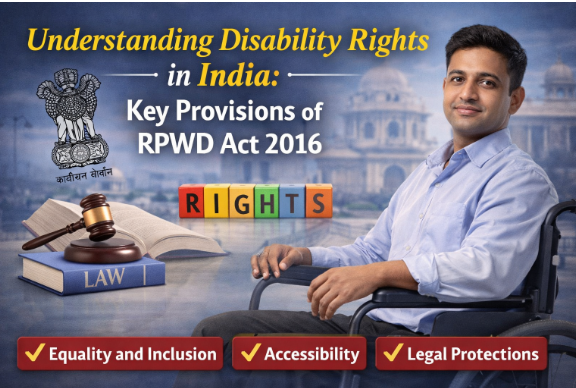
In recent years, awareness around disability rights in India has grown significantly. However, many individuals are still unaware of the legal protections and entitlements available to persons with disabilities. The Rights of Persons with Disabilities Act, 2016 (RPWD Act) plays a crucial role in ensuring equality, dignity, and inclusion.
This legislation goes beyond basic welfare and establishes a comprehensive framework to protect the rights of persons with disabilities across various aspects of life, including education, employment, and accessibility.
1. What is the RPWD Act 2016?
The RPWD Act 2016 is a landmark law enacted to align India’s disability framework with the United Nations Convention on the Rights of Persons with Disabilities (UNCRPD).
One of the key advancements under this Act is the expansion of recognized disabilities from 7 to 21 categories, ensuring broader inclusion and protection.
The Act emphasizes:
- Equality and non-discrimination
- Full participation in society
- Respect for individual dignity
2. Key Rights Guaranteed Under the Act
The RPWD Act establishes several important rights that aim to create an inclusive environment:
Right to Equality and Non-Discrimination
No person with a disability can be discriminated against in education, employment, or public services.
Right to Education
Children with disabilities are entitled to free and inclusive education, with necessary support systems in place.
Right to Employment
The Act mandates reservation in government jobs and promotes equal opportunities in the workplace.
Right to Accessibility
Public buildings, transportation, and digital platforms must be made accessible to persons with disabilities.
3. Focus on Accessibility and Inclusion
Accessibility is one of the strongest pillars of the RPWD Act. It ensures that persons with disabilities can participate fully in society without barriers.
This includes:
- Barrier-free access to public spaces
- Accessible transportation systems
- Inclusive digital platforms and services
The goal is to move from exclusion to active participation.
4. Role of Government and Institutions
The Act places responsibility on both government authorities and institutions to implement its provisions effectively.
Key responsibilities include:
- Creating policies for inclusion
- Ensuring accessibility standards
- Providing necessary support services
- Monitoring compliance and addressing violations
Failure to comply can result in penalties, making the law enforceable and impactful.
5. Protection Against Abuse and Exploitation
The RPWD Act also includes provisions to protect persons with disabilities from abuse, violence, and exploitation.
It ensures:
- Legal safeguards
- Access to justice
- Rehabilitation and support services
These protections are essential in promoting a safe and respectful environment.
6. Importance of Awareness and Legal Understanding
Despite the strength of the law, lack of awareness remains a major challenge. Many individuals are unaware of their rights or the mechanisms available to seek justice.
Understanding the provisions of the RPWD Act helps:
- Empower individuals
- Promote inclusion
- Reduce discrimination
- Ensure better implementation of the law
7. Moving Towards an Inclusive Society
The RPWD Act 2016 is not just a legal framework—it is a step toward building a more inclusive and equitable society. Its success depends on awareness, implementation, and collective responsibility.
Individuals, institutions, and policymakers must work together to ensure that the rights guaranteed under the law are effectively realized.
Conclusion
The Rights of Persons with Disabilities Act, 2016 represents a significant shift in how disability is perceived and addressed in India. By focusing on equality, accessibility, and dignity, it empowers individuals to lead independent and fulfilling lives.
Awareness and proper implementation of this Act are essential to ensure that its benefits reach those who need them the most. A well-informed society is the first step toward true inclusion.
About the Author
Panacea Disability Activists is a dedicated platform working towards promoting awareness, legal rights, and inclusion for persons with disabilities in India.
The platform focuses on educating individuals about disability laws, rights, and available support systems, helping create a more inclusive and accessible society.
To better understand legal protections and practical aspects, you can explore detailed insights on rights of persons with disabilities.