
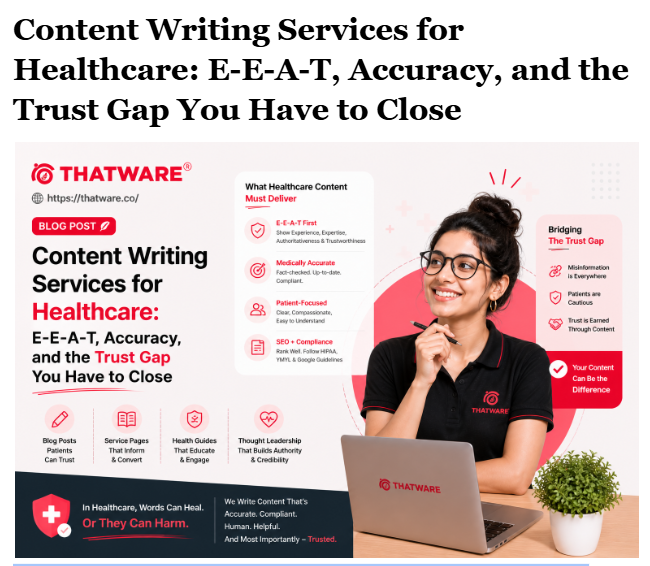
Healthcare content has the highest editorial standard of any content category, for reasons that should be obvious but are worth stating explicitly: wrong health information causes real harm. A misleading article about medication interactions, an inaccurate description of symptom significance, a flawed explanation of a diagnostic procedure – these aren’t just SEO problems. They’re potentially harmful to real people who found the content while trying to make decisions about their health.
Google’s E-E-A-T framework for healthcare content reflects this. The standards for expertise, authoritativeness, and trustworthiness are applied most strictly to health content because the stakes are highest.
What E-E-A-T Actually Requires for Healthcare Content
E-E-A-T for healthcare content isn’t a checklist – it’s a substantive standard. Expertise means the content is written by or thoroughly reviewed by someone with genuine clinical or public health expertise in the specific topic area. Not a general medical writer covering a broad range of conditions, but a cardiologist writing about cardiac conditions or a licensed therapist writing about mental health interventions.
Authoritativeness means the brand and the individual author have verifiable standing in the field. A hospital system with named physician authors who are board-certified in their specialties carries more authority than a health content website with generic “medical reviewer” bylines. The seo content writing services that produce genuinely authoritative healthcare content build systems for credentialed authorship – not just review processes, but clear presentation of who wrote and reviewed each piece and what qualifies them to do so.
The Accuracy Standard That Separates Good From Dangerous
Accuracy in healthcare content requires more than fact-checking. It requires staying current – medical guidelines change, treatment recommendations update, new evidence emerges. A piece on Type 2 diabetes management that was accurate two years ago may include recommendations that have since been superseded by updated clinical guidelines.
Content marketing agency india teams producing healthcare content for international markets need to understand that clinical guidelines and regulatory frameworks vary by country. The diabetes medication recommendations in the US differ from those in the UK and Australia. Content that’s accurate for one market may be clinically incorrect for another.
This creates a content maintenance obligation that healthcare brands often underestimate. It’s not sufficient to produce accurate content once. It requires systems for updating content when guidelines change – flagging pieces for review when relevant clinical updates occur, having qualified reviewers confirm continued accuracy, and documenting update history so readers can see when content was last reviewed.
The Trust Signals That Close the Gap
Trust in healthcare content is built through a combination of signals that readers evaluate – often unconsciously – when deciding whether information is reliable.
Byline credibility is the most powerful trust signal. Content attributed to a named, credentialed, verifiable healthcare professional – with a bio that includes their training, certification, institutional affiliations, and specialties – carries inherent credibility that “reviewed by medical experts” doesn’t. The name creates accountability that generic attribution doesn’t.
Source transparency is the next trust signal. Healthcare content that cites specific clinical guidelines, peer-reviewed research, and official health authority recommendations – with inline links to those sources – demonstrates evidentiary rigor that unsourced claims don’t.
Visual credibility signals matter too: institutional logos, professional photography of clinical settings, imagery that communicates professionalism rather than stock photo genericness. These are soft signals, but they contribute to the overall trust assessment that readers make before deciding how much to rely on the information.
The SEO-Trust Alignment in Healthcare Content
The alignment between E-E-A-T optimization and genuinely trustworthy healthcare content is tight. Content that’s genuinely excellent for readers – accurate, expert, clearly attributed, regularly updated – is also content that performs well in search. The brands that try to optimize healthcare content for search without genuinely meeting the trust standard tend to find their rankings are fragile, vulnerable to algorithm updates that specifically target health content quality. The brands that invest in genuine quality build search presences that are durable because they’re actually good.