
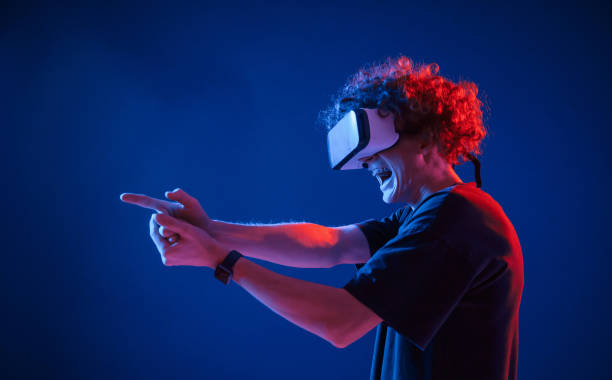
Virtual reality, or VR, has shifted from being a sci-fi fantasy to something that feels almost ordinary—but in the coolest way possible. Remember the first time you put on a VR headset? You’re standing in your living room, and suddenly, you’re on a spaceship, or fighting zombies, or exploring a fantasy castle. That feeling—that weird mix of awe and “wait, this is real?”—is exactly what makes VR gaming unlike any other gaming experience.
The Magic of Immersion
Traditional gaming is immersive in its own way, sure. You can get lost in a story, and you can feel emotionally connected to characters. But VR takes immersion to a whole new level. The moment you strap on a headset and grab the controllers, your brain starts to believe the virtual world is, well, real. The environment surrounds you in 360 degrees, and the sense of presence is so strong that your body reacts as if it’s actually there. If something comes at you, you flinch. If there’s a ledge, your stomach drops. That’s the magic of VR: it tricks your brain into feeling like it’s physically inside another world.
And it’s not just sight. Haptic feedback—vibrations and resistance in controllers—lets you “feel” the virtual world. Swinging a sword, shooting a gun, or even holding a fragile object feels surprisingly real. Companies like Meta, Valve, and Sony have been pushing haptics further, creating gloves and suits that make VR tactile, like you’re actually touching things. Imagine holding a virtual cup of coffee and feeling its weight in your hand. Weirdly satisfying, right?
Games That Push Boundaries
VR gaming isn’t just a novelty anymore; it’s a genre that’s producing some genuinely creative experiences. You’ve got the action-packed shooters like Half-Life: Alyx, where every gun reload and every step matters. Then there are rhythm games like Beat Saber, where your body moves to the music, making it feel like a full-on workout disguised as fun. And don’t forget the exploration games—titles like The Walking Dead: Saints & Sinners or No Man’s Sky VR let you wander massive worlds, solve puzzles, or interact with objects in ways traditional games can’t replicate.
What’s exciting is how developers are experimenting with storytelling. In VR, the player isn’t just controlling a character—they’re inhabiting them. This opens up new ways of emotional engagement. A character’s fear, joy, or tension hits differently when you’re “living” it rather than just watching it on a screen. That makes horror games terrifying and adventure games thrilling in ways flat screens never could.
Fitness Without Feeling Like Exercise
Another unexpected benefit? VR can make you actually move. Forget the idea that gaming is just sitting on your couch and clicking buttons. VR makes you swing, dodge, jump, and sometimes even crawl. Games like Supernatural or FitXR are basically virtual gyms where you’re burning calories without realizing it. Your heart rate goes up, you break a sweat, and it’s fun—because unlike the treadmill, it doesn’t feel like a chore.
VR fitness also taps into motivation differently. You’re not just exercising; you’re scoring points, defeating enemies, and exploring new worlds. And with multiplayer options, it can even become a social experience. Suddenly, working out doesn’t feel lonely, and maybe, just maybe, you’ll be excited to put on the headset instead of dreading a gym session.
Social VR: Meeting People in Virtual Spaces
VR isn’t just about gaming—it’s about connection. Social VR platforms like VRChat, Rec Room, or Horizon Worlds let you meet people from across the globe in virtual spaces. You can hang out in a digital lounge, play mini-games, attend concerts, or even take virtual tours of cities you’ve never visited. The weird part? It actually feels real. Seeing someone gesture, waving your hands, or even dancing with friends in VR creates a sense of presence that video calls just can’t replicate.
This is more than just fun—it has implications for education, remote work, and collaboration. Imagine students exploring the pyramids in VR history lessons, or designers prototyping in virtual studios with teammates in different countries. VR is slowly bridging the gap between digital and physical interaction.
The Tech Behind the Curtain
Of course, VR isn’t magic—it’s technology working overtime. Headsets track your head and hand movements in real time, translating them into the game. Advanced sensors, like LIDAR or infrared cameras, map your environment so you don’t bump into walls. And new controllers provide haptic feedback, pressure sensitivity, and finger tracking.
The biggest challenges? Hardware and cost. High-end setups like the Valve Index or Meta Quest Pro are expensive, and some people still struggle with motion sickness. But the tech is improving fast. Wireless headsets, better refresh rates, and adaptive game design are making VR accessible, comfortable, and more realistic than ever.
The Future of VR Gaming
What’s next for VR gaming? Expect more realism, more haptics, and more ways to interact. We’re talking gloves that let you feel textures, suits that simulate temperature, and headsets that eliminate the last traces of lag. There’s also the promise of mixed reality—where real and virtual worlds blend seamlessly. Imagine grabbing a cup from your real desk and having it appear as a magical potion in your game.
VR isn’t just a gadget or a toy; it’s a new way to experience stories, fitness, and social interaction. The line between virtual and reality is blurring, and VR gaming is leading the charge. For those willing to dive in, it’s not just entertainment—it’s a doorway into worlds you can actually touch, feel, and explore.
Whether you’re swinging a sword, dodging zombies, dancing to beats, or just hanging out with friends, VR has a strange, magnetic pull. It makes you forget that your living room exists and reminds you that imagination—powered by technology—can be truly physical. And honestly? Once you’ve felt it, going back to a flat screen feels… kind of boring.